 Curtail
Why Curtail exists, and why the blockers didn’t work
Curtail exists because I kept losing my evenings to my own phone, which is embarrassing, because selling ads used to be my job. Twelve years of the ads that pay for the feeds. If anyone should have been immune to the scroll, it was me.
I wasn’t. I’d open an app to check one thing, resurface forty minutes later, and do it again before bed. So I did what any reasonable person would do and put a cat in the way.
There’s a name for the fog now: “brain rot” was Oxford’s Word of the Year in 2024, and the year after it was “rage bait.” Even the dictionary people are worried.
It isn’t just you, or me
3.6h
spent in mobile apps per day by the average user in 2025, before any mobile browsing is counted.
Sensor Tower, State of Mobile 2026 →18h 36m
a typical week on social and video feeds alone, per online adult (Q2 2025 data).
DataReportal, Digital 2026 →58%
of US smartphone users said they use their phone too much, as of 2022. Among 18 to 29-year-olds: 81%.
Gallup, 2022 →45%
of US teens said they spend too much time on social media in 2024, and 44% say they have already cut back.
Pew Research Center, 2025 →To be fair to the phones: the biggest study that actually logged people’s usage found barely any link between screen time and mood, so nobody here will claim your phone is ruining your life, and I’ll leave “phone addiction” as a diagnosis to people with actual diplomas. The plainer story is that the hours are huge, most of us call it too much, and cutting back is the part that keeps not working.
What actually helps, per the research
Two weeks without mobile internet
In a randomized trial, blocking all mobile internet on people’s phones for two weeks improved mental health, well-being, and objectively measured sustained attention; the attention gain was about the size of ten years of age-related decline, and 91% of participants improved on at least one outcome.
Castelo et al., PNAS Nexus, 2025 →A month off Facebook
Deactivating Facebook for four weeks increased subjective well-being: modestly, as the authors are careful to say, and it durably reduced how much people used it after the experiment ended.
Allcott et al., American Economic Review, 2020 →Restriction alone barely moves the needle
Pooling 32 randomized trials of limiting social media, the effect on well-being is real but small; the authors conclude the evidence offers “only weak support” for restriction as a fix.
Burnell et al., SSM – Mental Health, 2025 →Doomscrolling and feeling worse
Doomscrolling is associated with lower life satisfaction and higher psychological distress. Associated: the studies are correlational, and nobody has run the experiment.
Satici et al., Applied Research in Quality of Life, 2023 →So the strong medicine works but almost nobody takes it twice, and the gentle reminders barely register. Curtail’s bet sits in between: not a hard app blocker, not another screen-time chart. Don’t lock the phone, just put something alive-looking in the way, so the scroll becomes a thing you notice yourself doing.
There are a hundred blocker apps. Why build one more?
Because I tried plenty: hard app blockers, friction screens, screen-time dashboards, and they all failed me the same way. Hard blockers put up a wall, and I treated the wall as a puzzle; it takes ten seconds to toggle one off and a week to uninstall it. Friction screens made me breathe and count, and my thumb learned to autopilot through the ritual without waking the rest of me. The apps that punished a slip taught me the fastest lesson of all: the day I most needed them was the day they made me feel worst, so out they went.
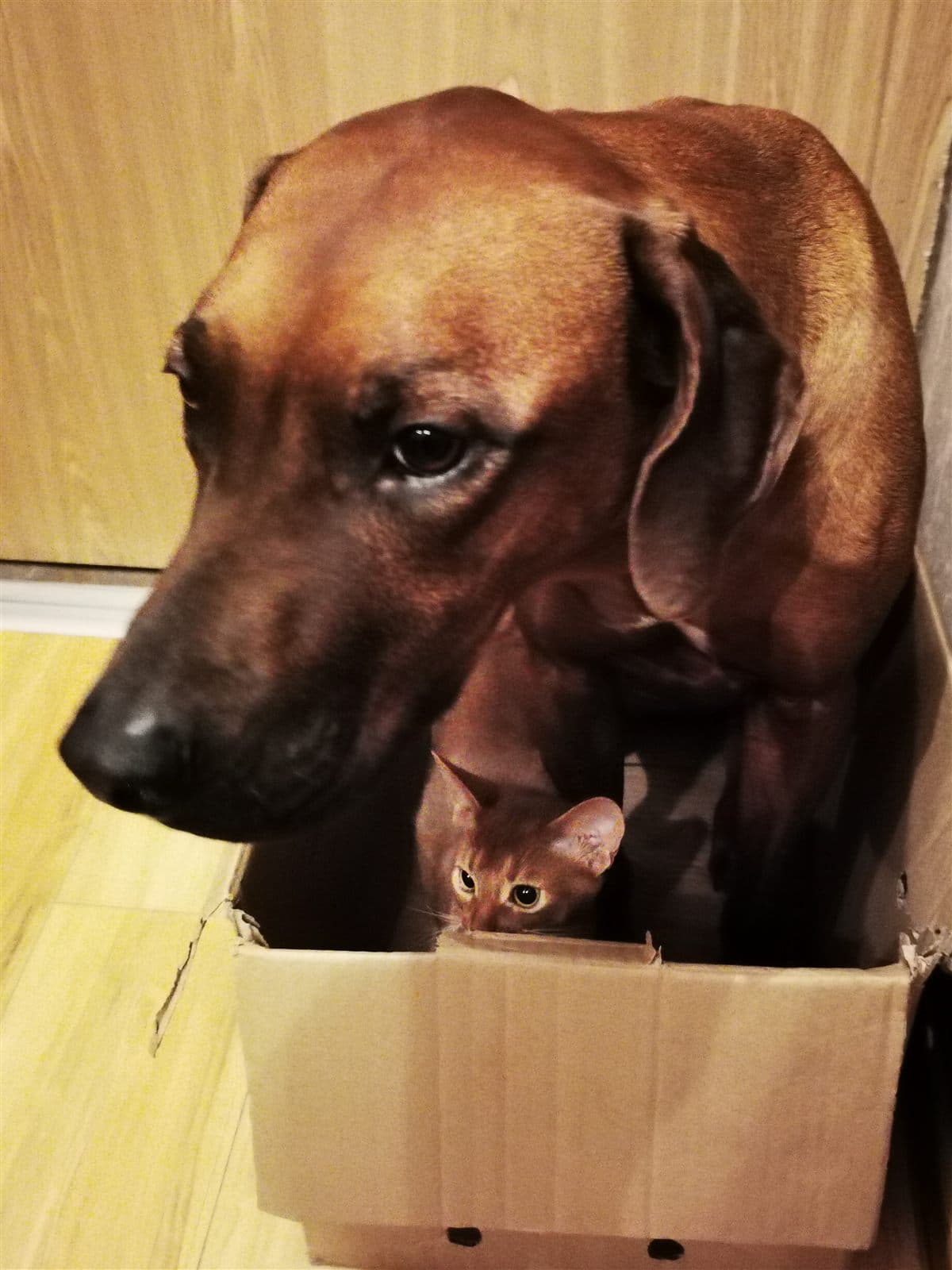
What I actually wanted didn’t exist. Not a warden, not a chart of my worst week, not a countdown in a nicer font. I wanted something personal on my screen, something lifelike enough that brushing it aside would cost me a little. And I had spent years living with exactly two creatures who could stop me mid-anything by walking into the room: Tango, a very large dog, and Cash, a fairly small cat.
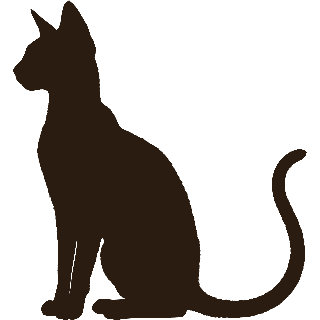
That’s how the two of them came into play. When your scroll budget runs out, Cash wanders onto the screen and sits on your feed, traced from photographs of the real cat: same walk, same sit, same unimpressed stare. Tango works the dog shift, traced from the real Tango: same big sit, same patience, same air of having nowhere better to be. Dismissing a timer is nothing; you’ve done it a thousand times. Walking past an animal you know, even a drawn one, is a thing you notice yourself doing. That flicker of noticing is the entire mechanism.
And next: the one who stops you
Mine worked on me because they were mine. So the next thing I’m building, not a someday dream, is exactly that for you: hand me a few photos of your own animal, and the one who walks onto your screen becomes them, drawn the way Cash is drawn. The picker in the app already holds the seat: “your own buddy, coming soon.”
It’ll be paid, opt-in, and the only part of Curtail that would ever touch the network, using only the photos you choose to send, for only this. The details live on the front page.






If the reasons make sense to you, the rest of the site shows the how: how it works, screen by screen, and the story of the real Tango and Cash.
Curtail is free on Google Play.